A roofing call is worth more than most trades’ calls. Angi’s survey of over 30,000 of its customers puts the average roof replacement at $9,530, with most homeowners paying between $5,870 and $13,223. Yet many roofing companies cannot say whether last month’s best jobs came from the yard signs, the Local Services Ads budget, the website or a truck parked at a job site. Call tracking answers that by giving each source its own phone number and logging every call that comes through it.
This page is for roofing companies with one location, a few crews and an office manager or owner answering the phone. If your biggest problem is calls nobody picks up rather than calls you cannot attribute, start with our guide to missed-call text back for roofers instead.
How we put this list together: researched from vendor pages, not hands-on tested. We read each vendor’s pricing page, help center and integration pages on November 4, 2026, and checked which roofing CRMs each one connects to. We have not run these trackers on a live roofing line, so there are no scores on this page. Our testing method explains how hands-on reviews work when we publish them.
Four call trackers for roofing companies, side by side
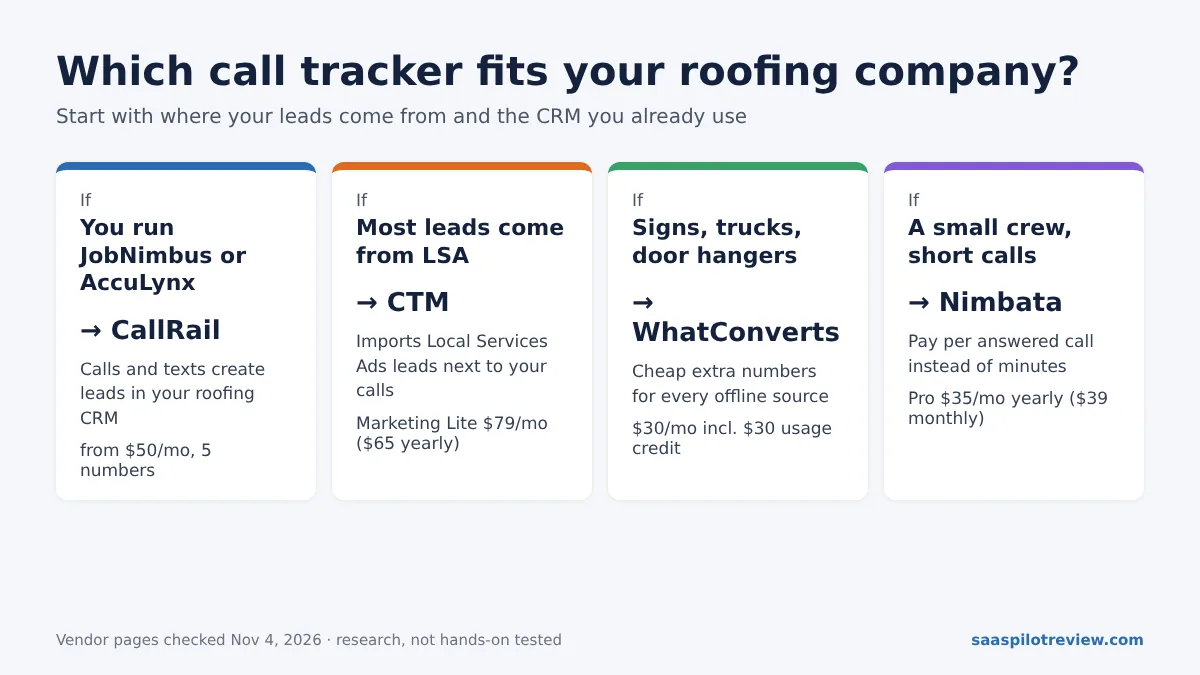
For most roofing companies on JobNimbus, CallRail is the simplest choice because tracked calls turn into JobNimbus leads without a third-party connector. If Local Services Ads bring in most of your work, CTM is the one that pulls LSA leads into the same report as your calls. WhatConverts and Nimbata cost less at the start and suit roofers who mainly need numbers for signs and trucks.
| Tool | Best for | Price from | Roofing CRM link | Main limit |
|---|---|---|---|---|
| CallRail Lead Tracking | Roofers on JobNimbus or AccuLynx | $50/mo with 5 local numbers and 250 minutes | JobNimbus built in; AccuLynx through its AppConnections add-on | Form tracking needs Lead Tracking Complete at $95/mo |
| CTM Marketing Lite | Roofers whose leads mostly come from Local Services Ads | $79/mo billed monthly, $65/mo billed yearly | Not covered on the pages we read | Number prices are “volume-based” and not printed |
| WhatConverts Call Tracking | Many offline numbers on a small budget | $30/mo, including a $30 usage credit | Not covered on the pages we read | Form and chat tracking start on Plus at $60/mo |
| Nimbata Pro | Small crews that want to pay per answered call | $35/mo billed yearly, $39/mo monthly, plus usage | Not covered on the pages we read | May add a charge if calls average over 3.5 minutes |
Prices checked November 4, 2026, US dollars. CallRail says a yearly plan saves up to 10% but does not print the yearly price.
What makes call tracking for roofers different
Most call tracking guides are written for agencies or e-commerce. Roofing has five quirks that change which tool and setup make sense.
- Storms drive the phone, not the calendar. The Insurance Information Institute says severe convective storms caused $51 billion in U.S. insured losses in 2025, the third year in a row above $50 billion. It adds that hail accounts for as much as 80% of these claims in a given year and that roofs make up an estimated 70% to 90% of insured residential catastrophe losses. In practice, a hail day can bring more calls in a week than a quiet month, so per-minute pricing matters more for roofers than for most trades.
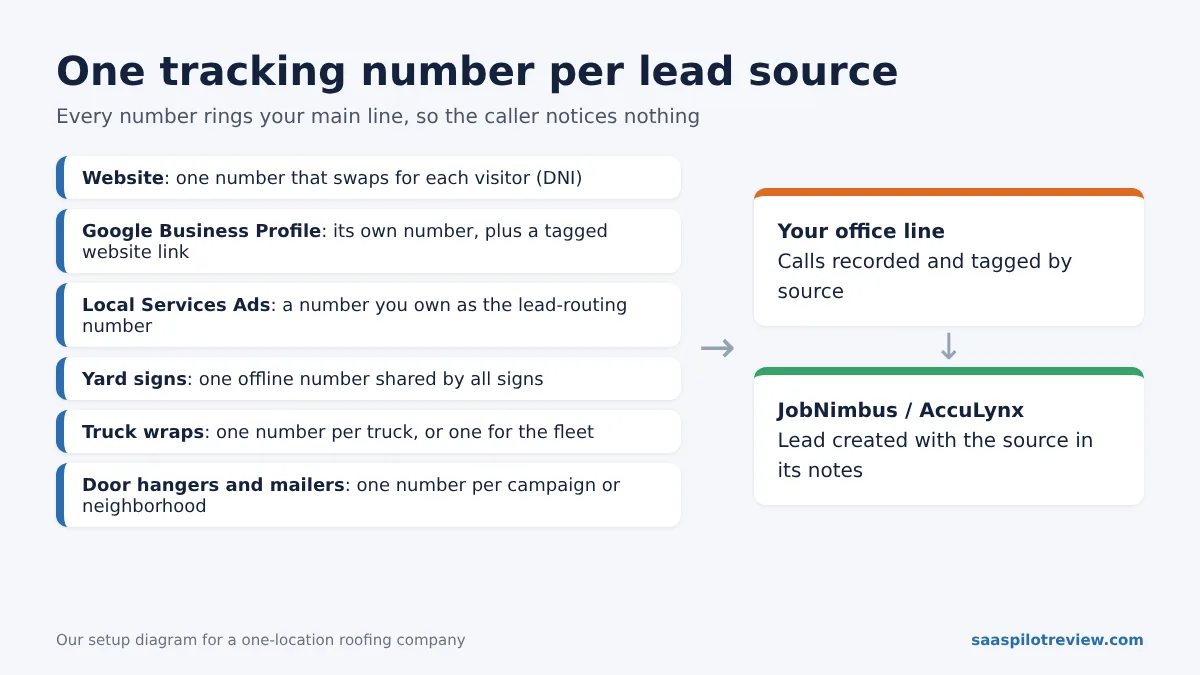
- Much of your marketing is offline. Yard signs, truck wraps, door hangers and mailers do not have a website visit to track. Each needs its own phone number, which is where the per-number price on each plan adds up.
- The sale happens weeks after the call. An inspection, an insurance adjuster visit and a signed contract can sit between the first call and the job. The call source has to travel into your CRM, or the link between a $50 yard sign and a $9,000 roof is lost.
- The roofing CRMs connect differently. CallRail creates JobNimbus leads through a built-in integration. AccuLynx connects to CallRail through its paid AppConnections add-on. Neither stores the call source in a dedicated field, as the section on CRMs below explains.
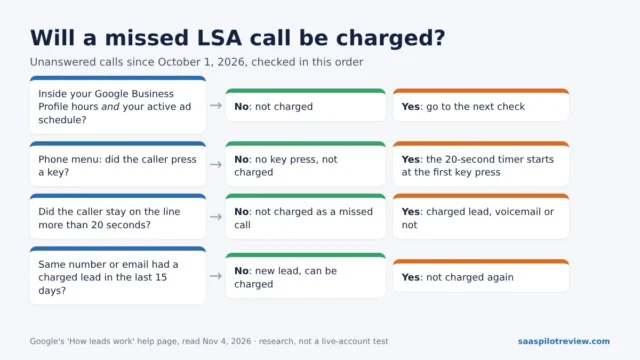
- Missed LSA calls now cost money. Since October 1, 2026, Google can charge Local Services Ads advertisers for a missed call during business hours if the caller stays on the line for more than 20 seconds, voicemail included, according to Google’s “How leads work” help page. A tracking number on your LSA profile gives you a record of every one of those calls that does not depend on Google.
The four options in detail
CallRail: the default for JobNimbus roofers
Best for: roofing companies on JobNimbus or AccuLynx that want tracked calls to arrive in the CRM as leads.
CallRail’s JobNimbus integration creates or updates a JobNimbus lead for every inbound call or text to a tracking number, after checking for a match on phone number or email, so repeat callers do not become duplicates. It sends the caller’s name, phone, email, the marketing source and the source, medium, campaign and landing page. Setup is an API key from JobNimbus pasted into CallRail’s integrations page. For offline sources, CallRail has a number type for print, TV, radio and direct mail that you name per campaign, and it notes these numbers do not swap on your website.
Price: Lead Tracking is listed at $50/mo with 5 local numbers, 250 minutes and 25 text messages. Extra local numbers are $3 each and toll-free numbers $5. The extra local minute rate shows as both 5 and 6 cents in different tables on the same pricing page. There is a 14-day free trial with no card.
Watch for: JobNimbus’s API cannot write to custom fields, so CallRail puts the attribution details in the lead’s Comments field. You can read the source on each lead, but you cannot easily report on it inside JobNimbus. For a head-to-head with an agency-style rival, see CallTrackingMetrics vs CallRail.
CTM: when Local Services Ads bring most of the work
Best for: roofers spending most of their ad budget on Local Services Ads who want those leads in the same report as every other call.
CTM (formerly CallTrackingMetrics) lists a Google Local Services Ads integration on its entry plan. Its integration page says it imports LSA leads into CTM whether or not the calls route through CTM, matches them to call data and lets you connect more than one LSA account. That matters more now that Google is moving LSA into Google Ads; our guide on how to track Google LSA calls after the move to Performance Max explains what changes.
Price: Marketing Lite is $79/mo billed monthly, $65/mo billed yearly or $60/mo billed every two years, and CTM waives the plan fee for the first month. Transcription is $0.02 a minute on Marketing Lite.
Watch for: local numbers are “volume-based pricing” with no figure on the pricing page, so you need a quote before you can compare the real monthly bill with CallRail.
WhatConverts: cheap numbers for signs and trucks
Best for: roofers who want a separate number on every yard sign batch, truck and mailer without paying CallRail’s $3 per extra number.
WhatConverts’ single-account Call Tracking plan lists up to 148 phone call leads and a $30 usage credit for tracking. Beyond that, extra local numbers are $2.50 each, local minutes 4.5 cents, toll-free numbers $3.50 and transcription 2 cents a minute. It has a help article on adding a number to track offline calls, and a 14-day free trial.
Price: $30/mo for Call Tracking; Plus at $60/mo adds form, chat and transaction tracking.
Watch for: the pricing and help pages we read do not mention a JobNimbus or AccuLynx connection, so plan on copying the source into your CRM by hand or through a connector such as Zapier.
Nimbata: pay for answered calls, not minutes
Best for: small roofing crews with modest call volume that want a low fixed fee.
Nimbata bills per answered call rather than per minute, which keeps a long insurance-claim call from costing more than a short one. Pro includes 4 seats and dynamic number insertion for your website, and transcription is 2 cents a minute. The 14-day trial is capped at 2 tracking numbers and 50 answered calls. Our Nimbata vs CallRail comparison works through the per-call math.
Price: Pro is $35/mo billed yearly ($39 monthly), plus usage for numbers and answered calls.
Watch for: Nimbata’s fair-use note says it may add an overage line if the average call per destination runs longer than 3.5 minutes. Roofing calls about insurance claims can run long, so check your average call length first.
What a storm month does to the bill
Here is how CallRail’s published rates play out for a roofer with six tracking numbers: website, Business Profile, Local Services Ads, yard signs, trucks and door hangers. The plan covers five numbers, so the sixth adds $3. The minute counts are our assumptions for illustration.
| Month | Minutes used | Plan | Extra number | Extra minutes at 5–6¢ | Total |
|---|---|---|---|---|---|
| Quiet | 250 | $50 | $3 | $0 | $53 |
| Normal | 400 | $50 | $3 | $7.50–$9 | $60.50–$62 |
| Storm | 1,500 | $50 | $3 | $62.50–$75 | $115.50–$128 |
Our calculation from CallRail’s pricing page, checked November 4, 2026. Excludes texts over 25, forms and add-ons.
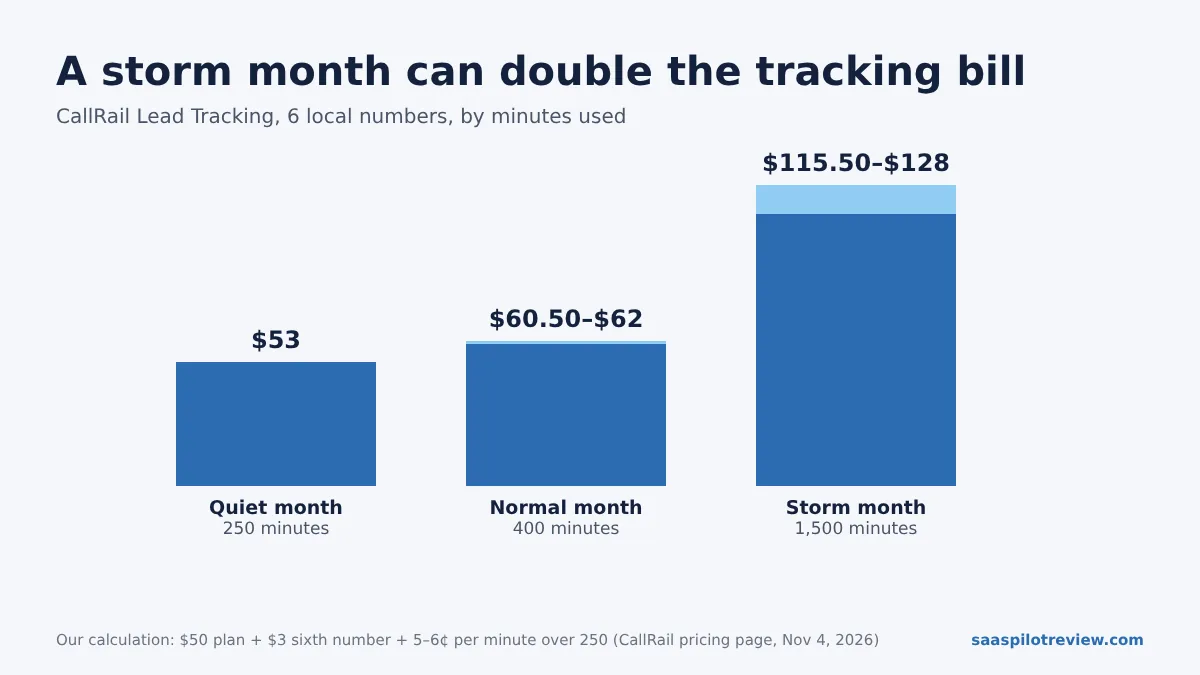
The storm bill roughly doubles, which is small next to one roof. It is still worth knowing before hail season, and it is the main reason roofers with very spiky volume look at per-answered-call pricing like Nimbata’s. To put a dollar figure on the calls you miss during that spike, try our missed call cost calculator.
Getting the call source into JobNimbus or AccuLynx
The tracking only pays off if the source follows the lead to the signed contract. Here is what each roofing CRM receives from CallRail, based on the two vendors’ own pages.
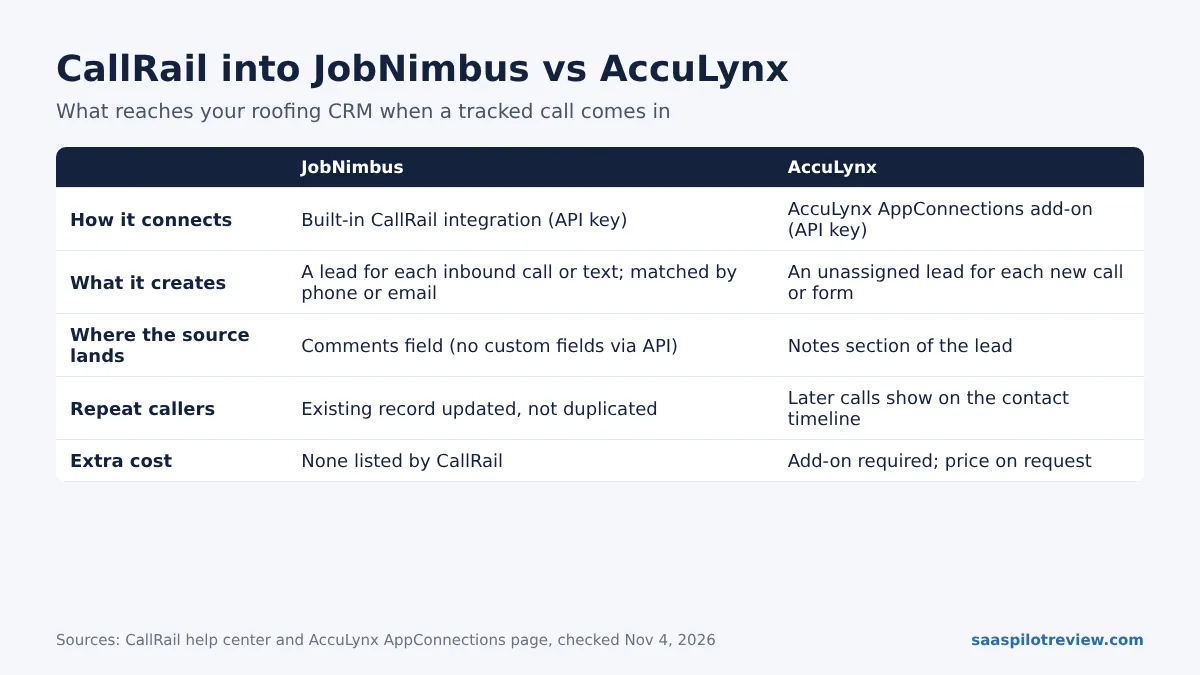
On AccuLynx, new inbound calls and form submissions create unassigned leads with the caller’s name, phone, city, state, notes, tags and qualification status. Later calls from the same contact show on its activity timeline with duration, tags and recordings. The lead source goes into the Notes section rather than a source field, and you need the AppConnections add-on, which AccuLynx prices on request.
Whichever CRM you use, add a step to your sales process: when a job is signed, someone copies the call source from the notes into whatever field your reports use. Without it, you will know which source rings the phone but not which one pays for roofs.
A setup order that avoids messing up your Google listing
- Start with three numbers: website, Business Profile and your biggest offline source. Add more once you trust the reports.
- Keep your real number in your website’s HTML and schema and let the tracking script swap it for visitors. Our guide on whether dynamic number insertion hurts local SEO covers the safe settings.
- Tag your Business Profile website link so calls from visitors who came from the profile are counted. Since Google removed call history from Business Profiles, this is the main way to see those calls.
- Set a tracking number you own as the LSA lead-routing number, so missed and charged LSA calls show up in your own log.
- Connect the CRM last, after a week of clean call data, and test it with a call from your own cell phone.
More options are in our call tracking and lead gen guides.
Sources
Checked November 4, 2026: CallRail pricing, CallRail JobNimbus integration, CallRail and JobNimbus, CallRail numbers for print, TV or radio, AccuLynx AppConnections: CallRail, CTM plans and pricing, CTM Google Local Services Ads integration, WhatConverts pricing, WhatConverts offline call tracking, Nimbata pricing, Google Local Services: How leads work, Angi roof replacement cost and Triple-I on 2025 severe convective storm losses.